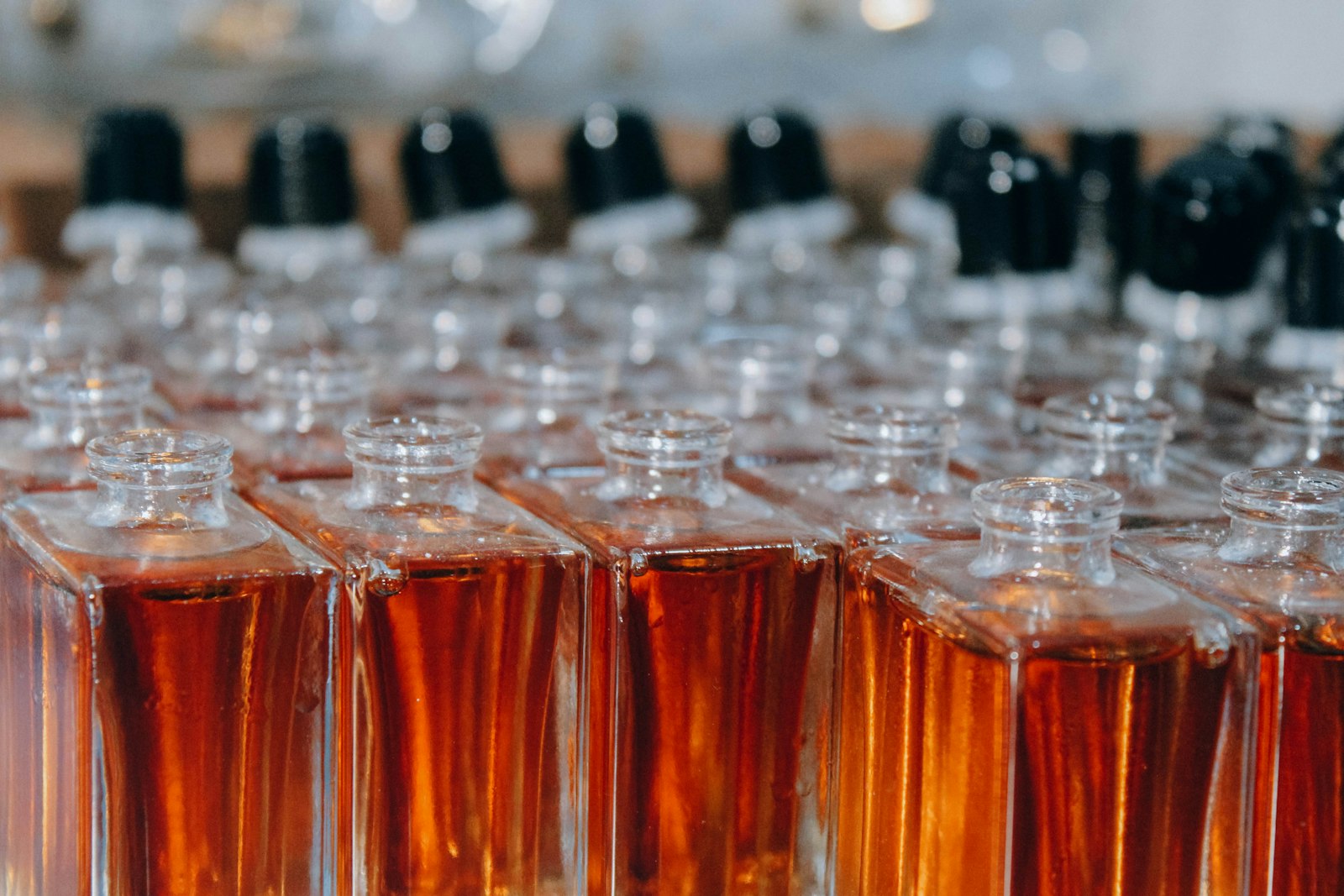


Somewhere in your bathroom there is a bottle of shampoo that smells faintly of pear and optimism. You probably think of that scent as a brand decision. In reality it was very likely built by one of a handful of companies you have never seen on a shelf. This week regulators in Brussels and London revealed that three of the biggest spent years swapping notes they were never supposed to share.
On 25 November 2026 the European Commission fined Givaudan, Firmenich and IFF a combined €471.9 million for taking part in an international fragrance cartel. On the same day the UK Competition and Markets Authority added £85 million of its own. Together that is well over half a billion euros, which is a lot of money even by the standards of an industry that sells liquid in bottles shaped like jewellery.
The invisible giants behind the label
If you remember Miranda Priestly’s cerulean monologue in The Devil Wears Prada, you already understand how this business works. The sweater Andy thinks she picked herself was chosen for her years earlier, in rooms she will never enter. Fragrance is the same story with more molecules. Consumer brands design the packaging and the campaign. The scent itself usually comes from specialist fragrance houses that compose, test and manufacture it for them, from fine perfume to washing-up liquid.
The Commission describes the three fined companies as the largest fragrance producers in the world. Their most important customer in this case was Unilever, which the Commission calls the world’s largest buyer of consumer fragrances. That is the company behind a long list of detergents, deodorants and shampoos you have almost certainly met in a supermarket aisle.
What the companies actually did
According to the regulators, the three firms exchanged commercially sensitive information about their dealings with Unilever. They discussed proposed price changes and how to respond when Unilever pushed for lower prices. The Commission also says they talked about a potential energy surcharge and how to handle Unilever’s requests for transparency on fragrance composition and ingredient costs. In plain terms: the customer was negotiating with three suppliers who were quietly comparing answers.
There was a talent clause too. The firms agreed not to poach employees from each other’s Unilever teams, which is the corporate version of a pact between rival bands never to steal each other’s drummer. Givaudan and IFF went further. According to both authorities, they exchanged information across their wider fragrance businesses and coordinated the level and timing of general price increases.
The EU says the infringement ran across the European Economic Area from March 2019 to March 2023, the month investigators carried out dawn raids. The CMA adds a detail that could have come from a British workplace sitcom: the contacts included WhatsApp messages, phone calls and in-person “beer and curry” meetings in London.
Who pays what
In the EU, Givaudan received the largest fine at about €252.4 million, followed by Firmenich at about €137.7 million and IFF at about €81.9 million. In the UK, Givaudan was fined £39.96 million, IFF £24.57 million and Firmenich £20.64 million.
Those numbers already include substantial discounts. All three companies cooperated under leniency programmes and settled. In the EU, IFF received a 50 percent reduction for leniency, Givaudan 30 percent and Firmenich 20 percent, with a further 10 percent for settling. In the UK the leniency reductions were even larger, plus 20 percent for settlement. The CMA notes that because the companies settled, they cannot appeal its decision.
Juliette Enser, who leads competition enforcement at the CMA, summed up the principle in one line: “Suppliers must set their prices and commercial strategies independently of each other.” It is not the most glamorous sentence ever written about perfume. It may be one of the most useful.
Why you should care about a supplier cartel
It is tempting to file this under business news and go back to choosing between two body washes. The CMA disagrees. It says the conduct covered fragrances found in everyday household products and in perfumes bought by UK consumers. It adds that collusion of this kind may ultimately feed through to higher prices for shoppers. The Commission warns along similar lines that consumers may end up paying more for cosmetics, detergents and cleaning products.
What neither regulator has published is a figure for how much extra you actually paid. That gap matters. A fine punishes the companies, but it does not refund anyone. The Commission points out that its decision can be used as binding proof of the infringement in damages claims before national courts. If customers such as consumer goods companies decide to sue, the story could have a second act that plays out far more quietly than this week’s headlines.
A very old industry with a very modern problem
Perfume has always lived on secrecy. When Ernest Beaux composed Chanel N°5 in 1921, the formula became one of the most closely guarded in fashion. Fragrance houses still protect their compositions fiercely. The irony of this case is that the secrecy went in the wrong direction. The formulas stayed hidden from customers, while the commercial strategies apparently travelled freely between competitors.
The case also shows how concentrated the beauty supply chain has become. A few specialist firms sit behind thousands of products, which makes them efficient and highly skilled. It also means that when they coordinate instead of compete, the effect can spread from luxury eau de parfum to the cheapest bottle of fabric softener.
So the next time a scent strip in a magazine promises you a story of rebellion or Mediterranean summers, it is worth remembering the less romantic chapter. Somewhere between the perfumer’s lab and your shelf, prices are negotiated. Regulators on both sides of the Channel have just reminded the industry that those negotiations are supposed to be a competition, not a group chat.
Key facts at a glance
- What: The European Commission fined Givaudan, Firmenich and IFF a combined €471.9 million for an international fragrance cartel on 25 November 2026.
- UK: On the same day the UK Competition and Markets Authority fined the three companies a total of £85 million.
- Conduct: The firms exchanged sensitive information about pricing toward Unilever and agreed not to poach each other’s Unilever account staff, while Givaudan and IFF also coordinated general price increases.
- When: According to the Commission, the cartel ran in the European Economic Area from March 2019 to March 2023.
- Status: All three companies received leniency reductions and settled. The CMA says they cannot appeal its decision.
FAQ
Which companies were fined in the fragrance cartel case?
Givaudan, Firmenich and IFF were fined by the European Commission and the UK Competition and Markets Authority on 25 November 2026.
How big is the fragrance cartel fine?
The EU fine totals €471.9 million and the UK fine totals £85 million. Givaudan received the largest share in both cases.
Did the fragrance cartel affect perfume prices for consumers?
Regulators say the conduct covered fragrances in perfumes and household products and may have led to higher consumer prices. No figure for the price effect has been published.
Sources
- Commission fines Firmenich, Givaudan and IFF €471.9 million for participating in an international fragrance cartel (European Commission)
- Major fragrance suppliers fined £85 million by the CMA for illegal collusion (UK Competition and Markets Authority)
- EU and UK regulators fine three global fragrance suppliers over international cartel (GRC Report)
This article was created with AI assistance and is based on the sources listed.