
In 1995, Cher Horowitz in Clueless picked her outfits on a computer screen that rotated through her wardrobe and told her what matched. It looked like science fiction for rich teenagers. Thirty one years later, a large share of American shoppers is doing something surprisingly similar for Black Friday 2026: they ask an AI assistant what to buy, compare prices with it and then click through to the shop. The only difference is that Cher’s closet never tried to upsell her a second pair of loafers.
The numbers behind this shift come from two of the most closely watched sources in American retail. The National Retail Federation surveyed 7,956 adults between 30 October and 9 November, together with Prosper Insights & Analytics. Adobe Analytics, which tracks online transactions at major US retailers, released its holiday forecast at the end of September and has been publishing interim figures since. Put together, they describe a Black Friday that looks familiar on the surface and very different underneath.
The bargain hunt goes conversational
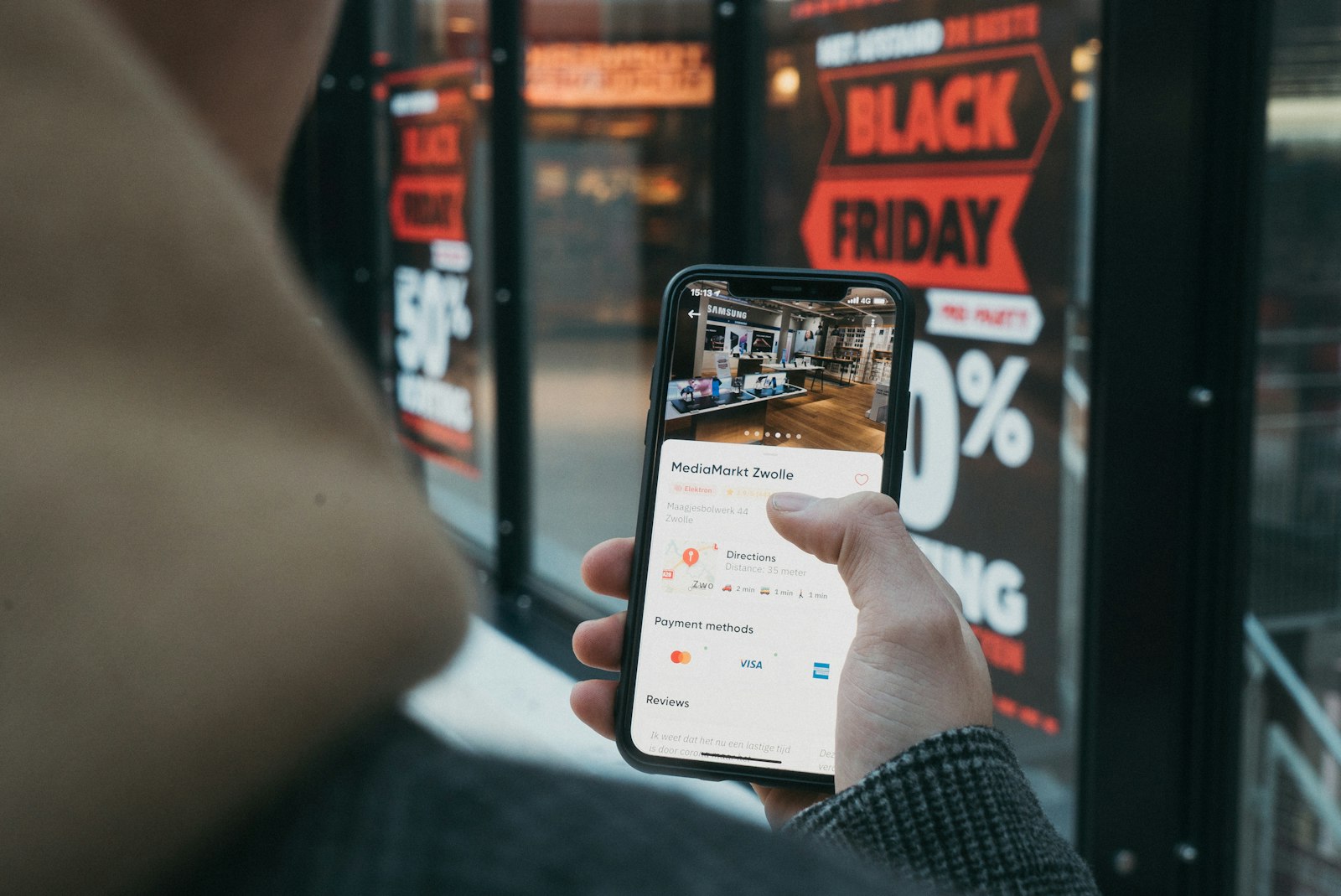
According to the NRF, 59 percent of holiday shoppers plan to use AI to support their winter holiday shopping. The most popular uses are product recommendations at 32 percent, brainstorming gift ideas at 31 percent, plus gift lists, budget tracking and scanning retailer sites for the best price, each at 25 percent. Phil Rist of Prosper Insights & Analytics put it plainly: “AI has become another tool consumers use to make holiday shopping easier”.
Adobe measures the same trend from the other side, through the clicks that land on retailer websites. The company forecasts that traffic from generative AI services to US retail sites will rise by 130 percent over the holiday season compared with last year. For Black Friday alone it expects an increase of 95 percent. Interim data reported by Digital Commerce 360 on 25 November showed AI referred visits up 127 percent year on year for the period from 1 to 22 November, so the forecast seems to be holding.
Important for context: these are growth rates, not market shares. Adobe does not publish how many visits in absolute terms come from chatbots. A doubling is impressive, but it does not automatically mean your neighbours have stopped scrolling shop apps themselves. Still, an Adobe survey of 5,000 consumers found that 77 percent of people who used AI for shopping felt more confident about their purchase and 69 percent said they were less likely to return an item. If that holds, it is a big deal for an industry that drowns in returns every January.
Black Friday 2026 in numbers
Adobe expects US online spending of 275.1 billion dollars between 1 November and 31 December, an increase of 6.7 percent. Black Friday itself should bring in 12.9 billion dollars online, up 9.2 percent, which would make it grow faster than Cyber Monday. Cyber Monday on 30 November is still expected to be the biggest online shopping day of the season at 15.1 billion dollars. Thanksgiving, once the day of turkey and family arguments, is forecast at 6.9 billion dollars in online sales.
The early weeks have already been strong. From 1 to 22 November, US consumers spent more than 82.5 billion dollars online, according to Adobe data cited by Digital Commerce 360, an increase of 9.1 percent. Buy now, pay later remains popular as well: Adobe forecasts 21.3 billion dollars in BNPL spending for November and December.
Fewer people, though, plan to physically take part in the weekend frenzy. The NRF expects 182.7 million shoppers over the Thanksgiving weekend, slightly down from 186.9 million last year. Black Friday remains the most popular day, with 69 percent of holiday shoppers, about 126 million people, planning to shop. The name, by the way, has a less glamorous origin than its marketing suggests: Philadelphia police are widely credited with popularising it decades ago to describe the traffic chaos on the day after Thanksgiving.
What it means for your wardrobe
For fashion lovers there is good news and sobering news. Clothing and accessories are the most popular planned gift category at 45 percent, according to the NRF. Adobe expects peak discounts on apparel of around 23 percent, with the best deals for clothing typically on Black Friday. Electronics are expected to peak at around 30 percent on Cyber Monday and toys at around 29 percent.
The sobering part: many shoppers are watching every cent. The NRF says 82 percent are taking steps to manage holiday costs, for example by buying less expensive gifts or shopping for fewer people. Gift cards have fallen out of favour, with only 39 percent planning to give them, the lowest share in more than 20 years of the survey. Apparently the most impersonal present of all is losing ground just as machines start helping us pick personal ones. Allison Zeller of the NRF summed up the mood in five words: “Shoppers are looking for deals”.
Who is really in charge of your shopping cart?
Here is where our interpretation begins. AI assistants promise to save you time and stress. In practice they shift the question of who decides what you see. Until now, retailers fought for a spot in search results or on your social media feed. Soon they will fight to be mentioned by a chatbot when you type “best winter coat under 300 dollars”. Which products appear there, why and with which commercial arrangements behind them is often not transparent. Spike Jonze imagined in Her how intimate a relationship with an AI could become. Black Friday 2026 shows a more prosaic version: the AI is not your soulmate, it is your personal shopper. Nobody quite knows who pays its commission.
That does not mean you should avoid the tools. Used well, they can compare prices faster than you ever could and can stop you from falling for fake discounts. A few old fashioned habits still help: check the price history, read the return policy, set a budget before you open any app and ask yourself whether you actually need the thing. A chatbot can find you the best price on a cashmere jumper. Whether you need a fourth one is still a question only you can answer.
Key facts at a glance
- AI use: According to the NRF, 59 percent of US holiday shoppers plan to use AI for their winter holiday shopping in 2026.
- AI traffic: Adobe forecasts that generative AI traffic to US retail sites will rise 130 percent this holiday season, with a 95 percent increase on Black Friday.
- Spending: Adobe expects US online holiday spending of 275.1 billion dollars from 1 November to 31 December 2026, up 6.7 percent.
- Black Friday: Adobe forecasts 12.9 billion dollars in US online sales on Black Friday 2026, while Cyber Monday is expected to remain the biggest day at 15.1 billion dollars.
- Shoppers: The NRF expects 182.7 million people to shop over the Thanksgiving weekend, down slightly from 186.9 million last year.
FAQ
How many people use AI for Black Friday 2026 shopping?
According to the National Retail Federation, 59 percent of US holiday shoppers plan to use AI to support their holiday shopping in 2026. The most common uses are product recommendations and gift ideas.
How much will Americans spend online on Black Friday 2026?
Adobe forecasts 12.9 billion dollars in US online spending on Black Friday 2026, an increase of 9.2 percent. Cyber Monday is expected to reach 15.1 billion dollars.
What discounts can you expect on clothing on Black Friday 2026?
Adobe expects peak discounts on apparel of around 23 percent, with the deepest clothing deals typically on Black Friday. Electronics are expected to peak at around 30 percent on Cyber Monday.
Sources
This article was created with AI assistance and is based on the sources listed.