
Updated November 23, 2026. We rewrote this article from 2024 and added the 2026 Northwestern study that confirms the 20-year fashion cycle.
If you threw away your low-rise jeans, butterfly clips and baguette bag around 2008, you probably regret it now. Fashion insiders have talked for decades about a “20-year rule”: styles disappear, become embarrassing and then return as cool. In 2026 the rule got something it never had before: mathematical proof.
The science: a 20-year cycle in the data
In March 2026 researchers from Northwestern University presented the most comprehensive study of the fashion cycle so far at the American Physical Society’s Global Physics Summit. Led by the applied mathematician Emma Zajdela, now at Princeton, and Northwestern professor Daniel Abrams, the team analysed roughly 37,000 images of women’s clothing from 1869 to today, mostly archival sewing patterns, and measured features such as hemlines, waistlines and necklines.
The result: styles rise, fall out of favour and return in a wave that repeats roughly every 20 years, exactly what the fashion industry had long assumed. The researchers model fashion as a system driven by two forces that pull against each other: the wish to belong and the wish to stand out. The team also found that trends have become more fragmented in recent decades, with several niches flourishing at the same time instead of one dominant look.
Why the cycle is about 20 years
The study explains the mechanics, but the length of the cycle also has a human explanation. Twenty years is roughly one generation. The styles of your teenage years feel embarrassing to you in your twenties, because they are too close. For the next generation they are history, and therefore interesting. Researchers call this “vicarious nostalgia”: young people romanticise an era they never lived through consciously, often perceived as simpler and less dominated by screens.
Industry mechanics play a role too. Designers who were teenagers 20 years ago are now creative directors, and their references become runway collections. Second-hand platforms and archive shops make original pieces easily available, and social media turns every rediscovery into a trend within days.
2026: the millennial revival
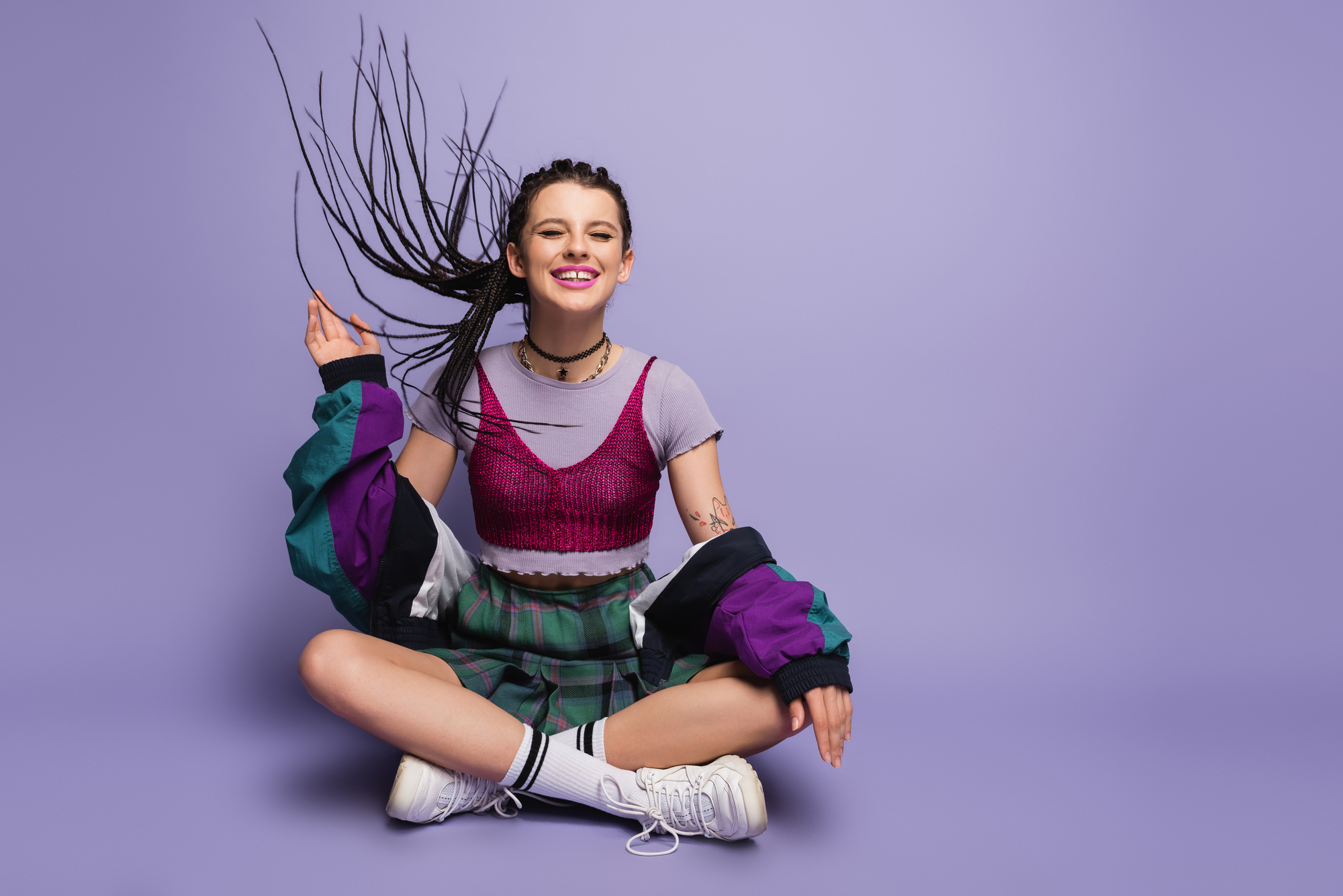
The current proof of the rule is everywhere. The early 2000s are back with low-rise jeans, baby tees, trucker hats, glossy lips, peplum tops and baguette bags. US retailers are betting that Gen Z’s interest in brands such as Coach, Ed Hardy, Juicy Couture or UGG is a lasting revival rather than a TikTok fad. Some trend observers see the cycle accelerating: the “2026 is the new 2016” trend brought back skinny jeans, chokers and bomber jackets only ten years after their peak.
Not everyone believes the revival will last. Critics point out that the market is far more diverse than 20 years ago and that nostalgia waves now burn out faster. Both views fit the Northwestern findings: the basic 20-year rhythm remains, but it now runs in parallel with shorter micro cycles driven by social media.
What this means for your wardrobe
The practical lesson is simple: well-made pieces are rarely a mistake, they are just early. Classic items such as trench coats, loafers and silk scarves survive almost every cycle. Statement pieces come and go but tend to return. If you have the space, keep the good things. And if you buy vintage, look for quality first, because the next revival is already on its way. Following the 20-year rule, the late 2000s and early 2010s, from skinny jeans to indie sleaze, are next in line.
Key facts at a glance
- The rule: fashion trends tend to return roughly every 20 years
- Scientific basis: Northwestern University study, presented March 2026, about 37,000 images of women’s clothing from 1869 onwards
- Why 20 years: about one generation: what feels dated to one generation feels fresh to the next
- Current example: the early 2000s revival with low-rise jeans, baby tees and baguette bags
Frequently asked questions
What is the 20-year fashion cycle?
The 20-year fashion cycle, also called the 20-year rule, describes the observation that clothing styles return roughly every two decades. A 2026 Northwestern University study confirmed the pattern with data from more than 150 years of women’s fashion.
Why do fashion trends come back?
Styles return because each generation rediscovers what the previous one discarded, designers draw on the references of their youth and second-hand platforms and social media make old styles easy to find and share.
Is the fashion cycle getting faster?
The basic rhythm of around 20 years still holds, but social media creates shorter micro cycles. In 2026, for example, styles from 2016 returned after only ten years.
Sources
- Bell-bottoms today, miniskirts tomorrow: math reveals fashion’s 20-year cycle (Northwestern University, March 2026)
- Back in Fashion: Modeling the Cyclical Dynamics of Trends (APS Global Physics Summit 2026)
- This rule has been controlling fashion for 150 years (BBC Science Focus)
- Mathematics suggest that fashion is on a 20-year cycle (Nautilus, March 2026)
- Gen Z, millennial style and Y2K (The Philadelphia Inquirer, January 2026)
- Y2K fashion and Gen Z (The Boston Globe, July 2026)
This article was updated with AI assistance and is based on the sources listed.